

Tell me in a few clicks what your organisation needs. I am happy to drop by and get acquainted.
Uncertainty about hygienic working is common in many teams. I help staff apply the agreements on hand hygiene and infection prevention with confidence and consistency.
Almost every care worker knows that hygiene matters. Yet on the floor I often see doubt: when are gloves needed, when are they not, and what is the right way of working with a client who has an infection? That uncertainty leads to differences in working methods and ultimately to risks for clients and colleagues.
I start with the basics, because that is where most can be gained. At hand hygiene on the floor you can read how the well-known five moments of hand hygiene come back in daily care, and why things go wrong precisely when it is busy.
Hygienic working is closely linked to other topics I focus on, such as wound care and fall prevention. Agreements you want to record are best worked out in a work instruction for care teams, short and without jargon.
I work alongside your staff, not above them. By observing and explaining in the moment itself, confidence in the team grows. In doing so I follow the hygiene guidelines and the policy of your organisation.
I discuss with the team leader which hygiene questions are playing a role and observe how work is done on the ward or in the community.
During the work I give short, practical explanations. Staff can ask questions straight away, in the situation where the doubt arises.
What the team agrees together, I record in a short work instruction that fits the policy of your organisation.
After an agreed period I observe again and discuss the findings with the team leader or quality officer.

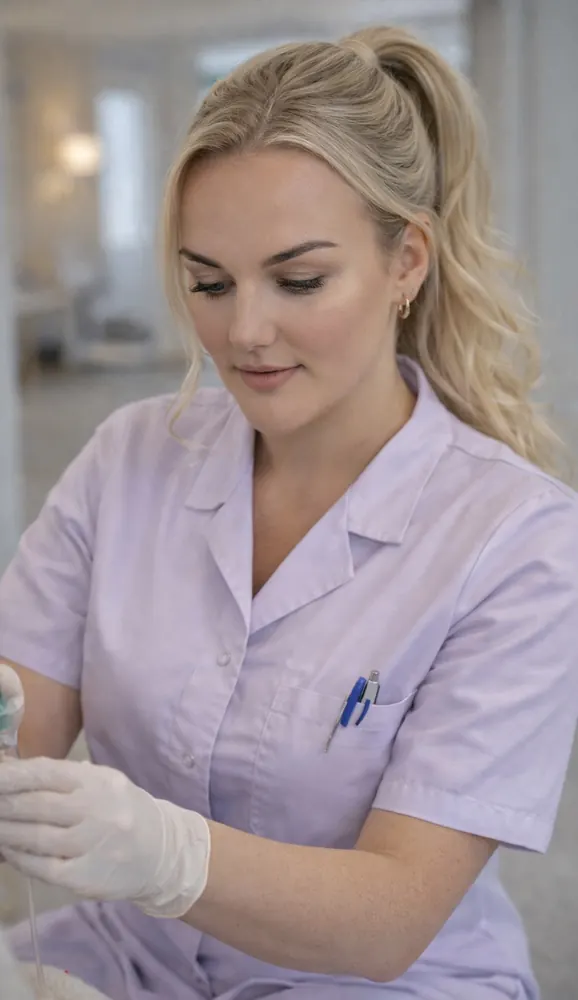

Nursing homes and residential care
Area of experienceCare for clients at home
Area of experienceCare for people with dementia
Area of experiencePhysical care and nursing
Area of experienceCare in the last phase of life
Area of experienceRecovery after illness or admission
Area of experienceEverything you want to know about hygienic working.
No, I am a nurse. I help teams apply existing guidelines and agreements properly. For specialist questions the infection prevention specialist of your organisation or region remains the point of contact.
My strength lies on the floor. Explanations given during the work often stick better. A short team meeting can be part of it; we agree that in the assignment.
That depends on your question. Often it concerns hand hygiene, the correct use of gloves and other protective equipment, and cleaning aids and equipment.
By keeping them short and concrete, giving them a place in the induction of new colleagues and discussing them together regularly. A team that understands the agreements also applies them when it is busy.
Yes. At home the circumstances are different and less predictable. That is exactly why it is important that staff know for certain what they are doing, even without a colleague nearby.
By explaining why an agreement exists and by listening to what is difficult in practice. An agreement that is workable is more likely to be followed.
Schedule a meeting. I am happy to visit and discuss what I can do for your organisation.
Schedule a meeting Contact